

RELATED PRODUCTS
Optical Serial Transmission test
ALBEDO expands its testing capabilities with Optical Serial Transmission, enabling engineers to verify the performance, reliability and delay characteristics of serial communication links used in power utilities and other critical infrastructures.
BARCELONA OCT.12.2026
Optical Serial Transmission testing with ALBEDO
Serial communication remains widely used in teleprotection and other critical infrastructure applications, where reliability and deterministic transmission are essential. However, electrical serial links can be affected by attenuation, electromagnetic interference (EMI) and differences in electrical potential.
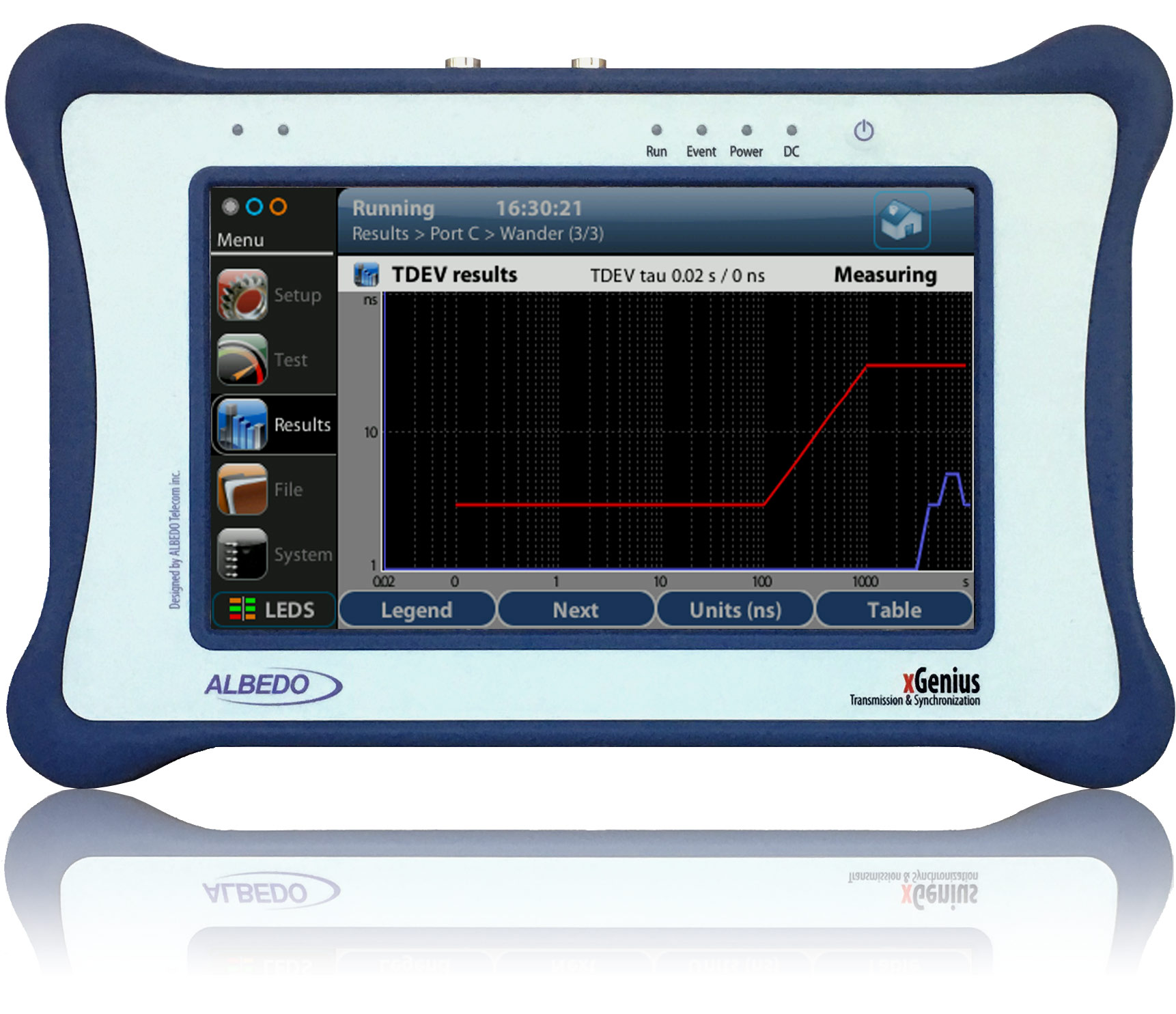
Fig 1. Zeus and xGenius add Optical Serial Transmission testing.
Zeus and xGenius can now test and analyze Optical Serial Transmission links, extending its capabilities beyond the electrical serial interfaces already supported. Engineers can perform performance and delay measurements, as well as insertion and service-disruption tests, directly from the platform.
Serial Communications in Power Utilities
Modern power substations increasingly rely on Ethernet and IP technologies, nevertheless, serial communications remain widely deployed in protection, control and automation systems, particularly where existing infrastructure must continue operating reliably for many years. One important application is Teleprotection, where protection equipment at different substations exchanges critical information to detect faults and isolate affected sections of the electrical network.
These communications require high availability, low latency and predictable transmission delays. Excessive delay, transmission errors or unexpected service interruptions may compromise the correct operation of protection schemes. Traditionally, serial communications used electrical interfaces such as V.24, V.35 and X.21. Although well established, electrical connections have limitations, particularly in the electrically demanding environment of power substations.
Fig 2. Optical fiber eliminates many of the limitations of copper, but it does not guarantee error-free or delay-free communications.
Why Optical Serial Transmission?
Optical Serial Transmission carries serial data over optical fiber rather than metallic cables. It offers several advantages:
- Immunity to electromagnetic interference (EMI): optical signals are unaffected by the strong electromagnetic fields present in substations.
- Electrical isolation: fiber eliminates conductive paths, avoiding problems caused by ground potential differences and electrical transients.
- Longer transmission distances: optical fiber can support connections beyond the practical reach of many electrical serial interfaces.
- Reliable communications: optical links provide a robust transmission medium for protection and control applications.
A common application in Power Utilities is IEEE C37.94, which specifies an optical interface between teleprotection equipment and digital multiplexers, supporting data channels from 64 to 768 kb/s.
Testing Optical Serial Links
Optical fiber eliminates many of the limitations of copper, but it does not guarantee error-free or delay-free communications. Problems can arise from defective optical components, incorrect interface configurations, transmission errors or excessive delays introduced by communication equipment. Typical tests include:
- Bit Error Rate (BER): to verify data integrity
- Transmission Delay: to measure the time
- Error Insertion: to evaluate equipment behavior
- Service Disruption: to verify how equipment responds
These measurements help engineers identify potential problems before they affect critical protection services.
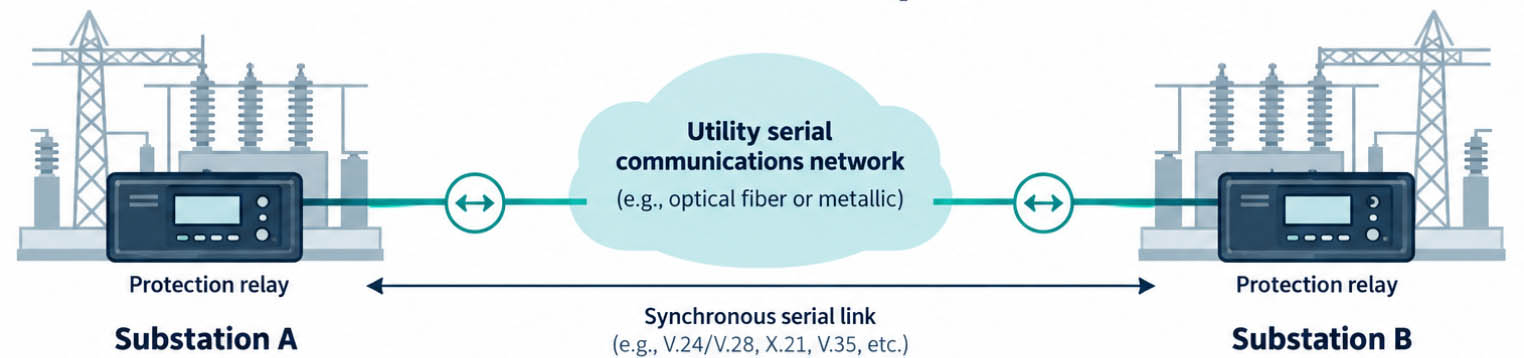
Fig 3. Optical Serial Transmission in a Teleprotection application.
Optical Serial Testing with Zeus
By combining electrical and optical serial testing with modern packet-network analysis, Zeus helps utilities and telecommunications operators maintain their existing infrastructure while progressively migrating to new communication technologies.