

RELATED POSTS
RELATED PRODUCTS
MORE INFO
Advanced IEEE 1588 Test Modes
PTP networks require validation beyond confirming lock to a master clock. This post introduces four advanced xGenius/Zeus test modes for analyzing synchronization paths, Grandmaster behavior, Boundary/Transparent Clocks, and physical timing outputs.
UIO - JUN 08, 2026
The Precision Time Protocol (PTP), as defined by IEEE 1588, is a critical synchronization technology used in telecommunications, power utilities, financial infrastructure, industrial automation, and other time-sensitive applications. As these industries become more dependent on precise phase and time distribution, validating PTP requires more than confirming a device’s ability to lock to a master clock. Engineers must also verify the behavior of Grandmasters, Boundary Clocks, Transparent Clocks, PTP-aware switches, routers, and Slave Clocks under realistic operating conditions, such as redundant timing paths, profile translation, grandmaster failover, asymmetric delays, and physical timing output accuracy.
The IEEE 1588 Advanced Test Option for the ALBEDO xGenius and Zeus platforms was developed to address this issue. It provides four coordinated test configurations that enable a single instrument to perform a wide variety of PTP device validations:
- Dual Sync Analyzer for comparing synchronization performance across independent PTP paths, masters, profiles, or network segments.
- Dual Master Analyzer for validating BMCA convergence, grandmaster selection, failover behavior, relative time offsets between grandmasters, and domain isolation.
- BC/TC Test for evaluating Boundary Clocks and Transparent Clocks, including noise generation, correction field behavior, and time error performance.
- SC Test for qualifying physical timing outputs such as 1PPS, Time-of-Day, frequency signals, or IRIG-B against applicable timing limits.
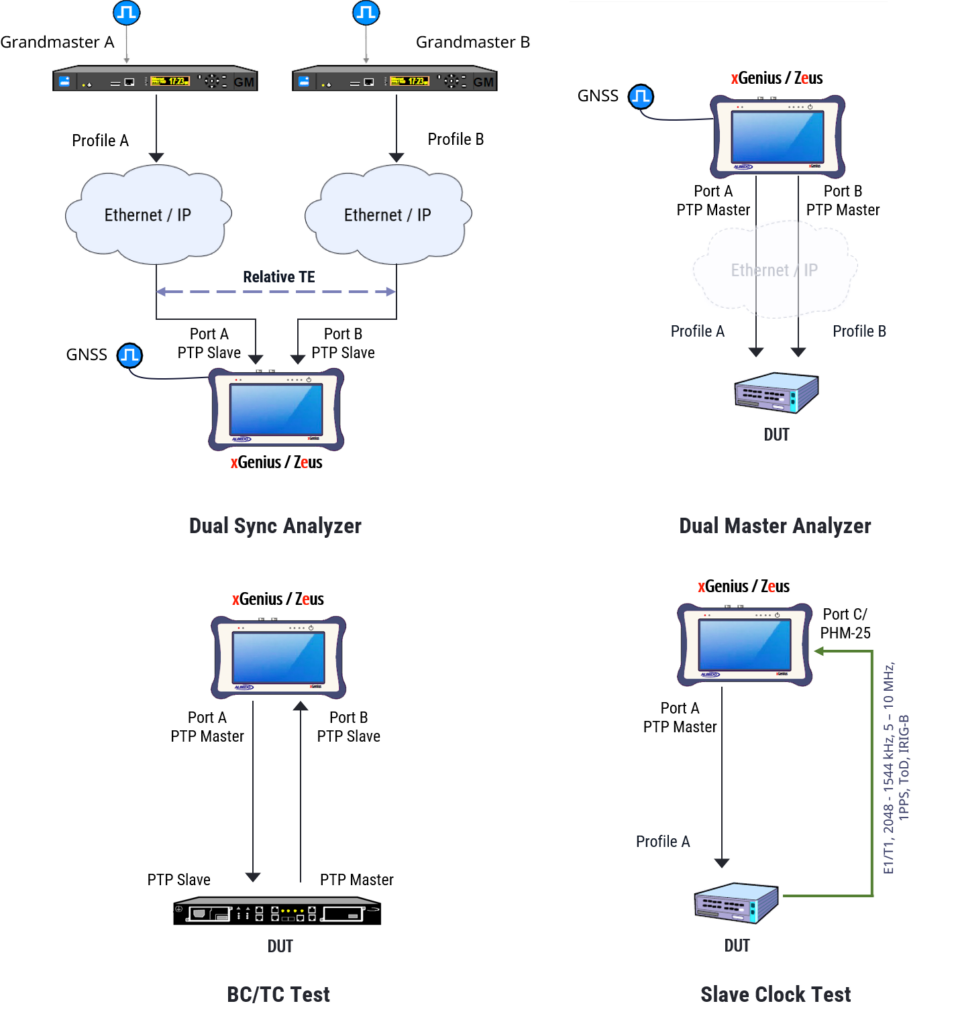
Fig 1. xGenius/Zeus Advanced PTP Test Modes
Beyond test coverage, the shared oscillator architecture of xGenius and Zeus cancels correlated error sources between ports. This improves measurement consistency and accuracy compared with setups that require multiple independent instruments.